
Quote
Azalea should mainly be treated and cared for after flowering.
INSTRUCTION
The Azalea generally loves bright locations, but does not tolerate too much sun. Partial shade is therefore ideal in summer. Compared to other bonsai species, the Azalea requires a particularly large amount of water, about twice as much as most other varieties. The choice of water is important. As the Azalea does not tolerate lime, rainwater or water from a pond is suitable.
The ideal repotting time for the Azalea is March. Later repotting after flowering is also possible, but there should still be time until the hot summer months, otherwise it will not grow well. Pure Kanuma (acidic soil), which can be enriched with five to ten percent white peat, has proven to be the ideal substrate for the Azalea.
Azalea should mainly be treated and cared for after flowering.
Step 1
Here the Azalea is still in full bloom, usually at the end of May.

step 2
Here the azalea has almost completely faded. Now is the ideal time for further processing.

step 3
Around the beginning of June, most of the azalea's flowers have already fallen off on their own. Any remaining flowers should now be carefully removed.


step 4
The ovaries are now located where the flowers have fallen off. They must be completely removed for further processing, as their formation costs the azalea a lot of energy.
step 5
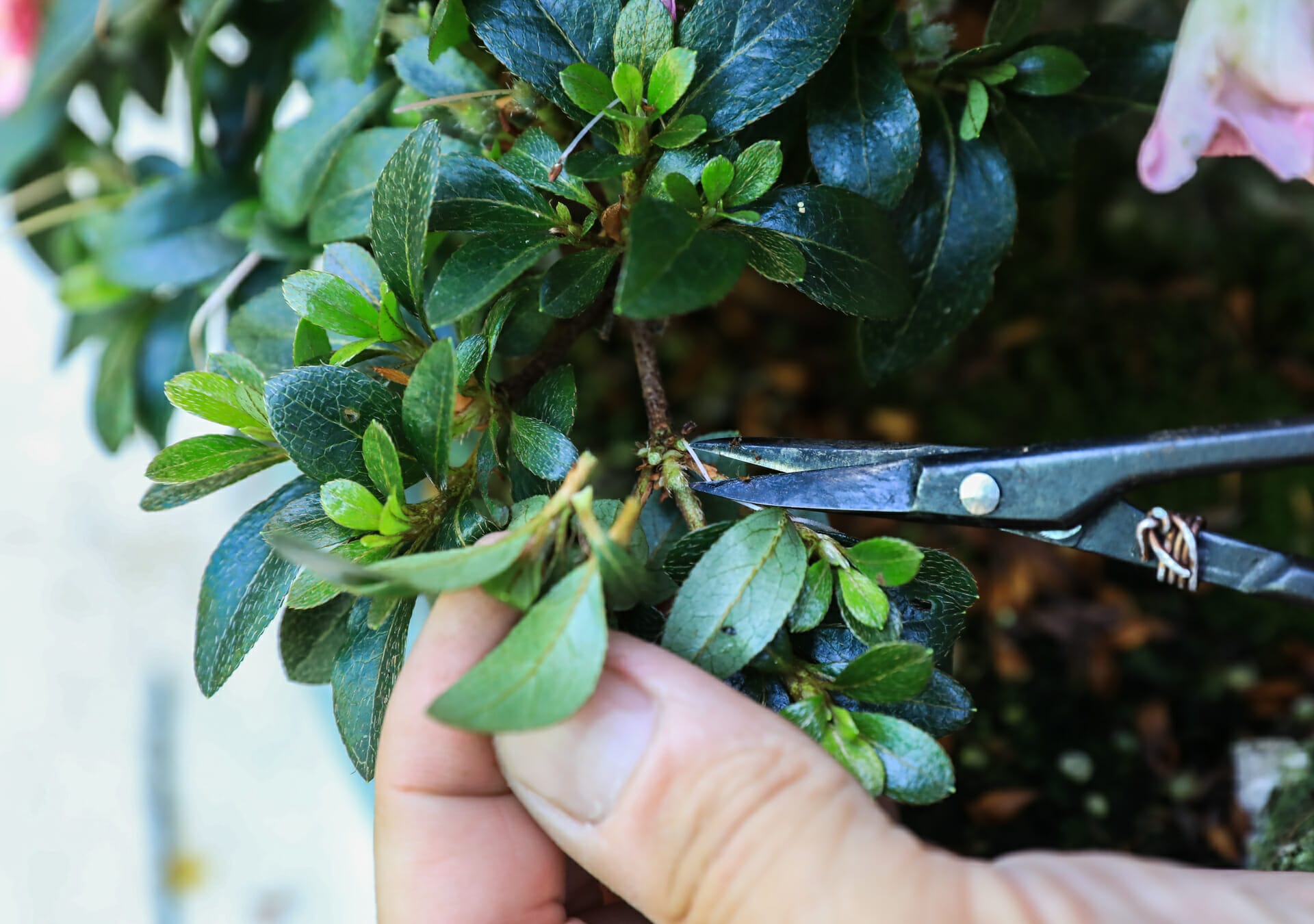
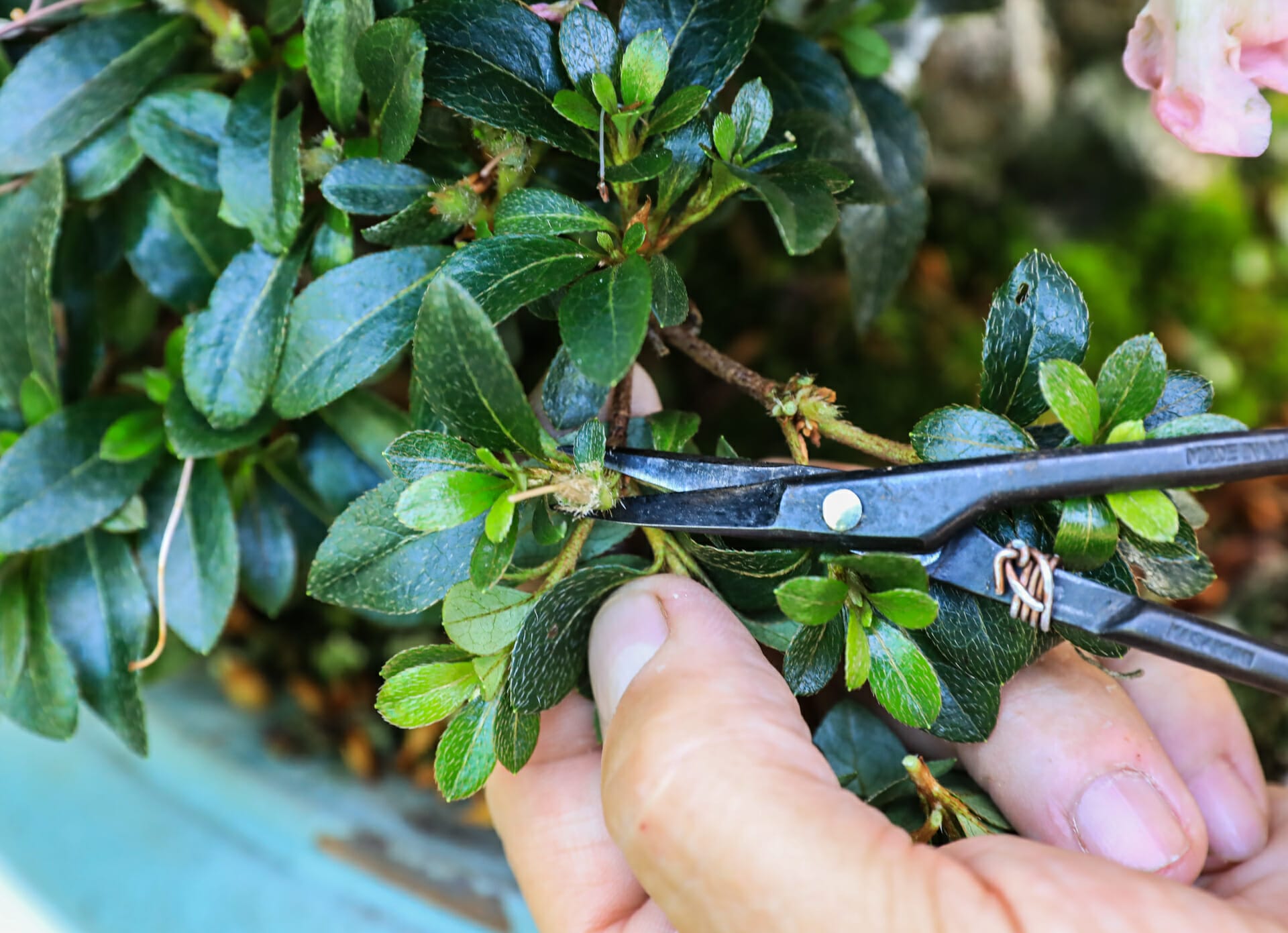
Azalea often sprouts nodes with several branches at once. To avoid unwanted knotting from the outset, only two shoots should be left. The remaining shoots must be removed.


step 6
Care also includes removing small leaves at the base of the branch.
To thin out the tips of the branches, remove about a third of the leaves from the end of the branch.

step 7
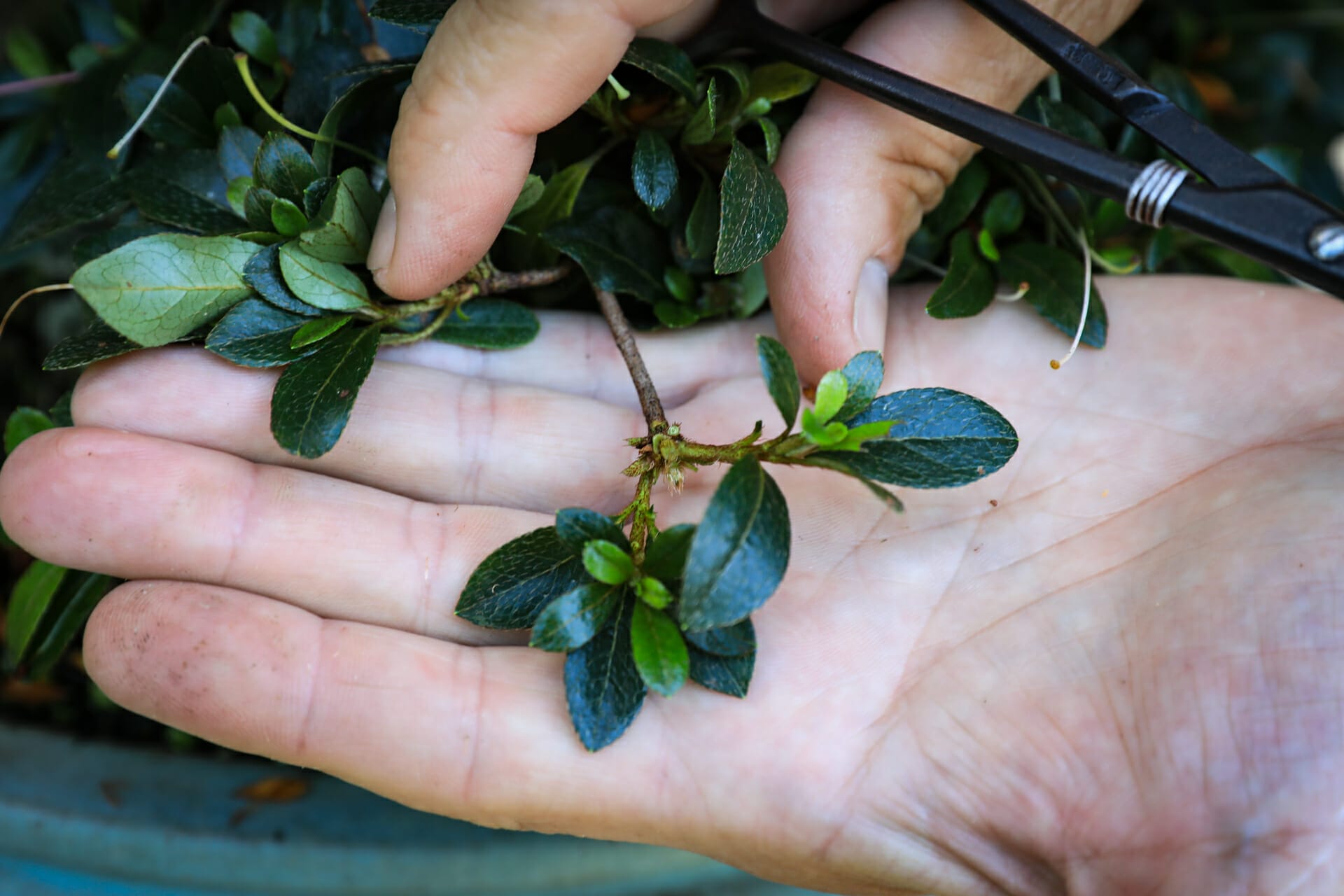
Here we see a branch that has been correctly processed and freed of leaves.
step 8
Another example of the correct thinning out of denser branching.


step 9
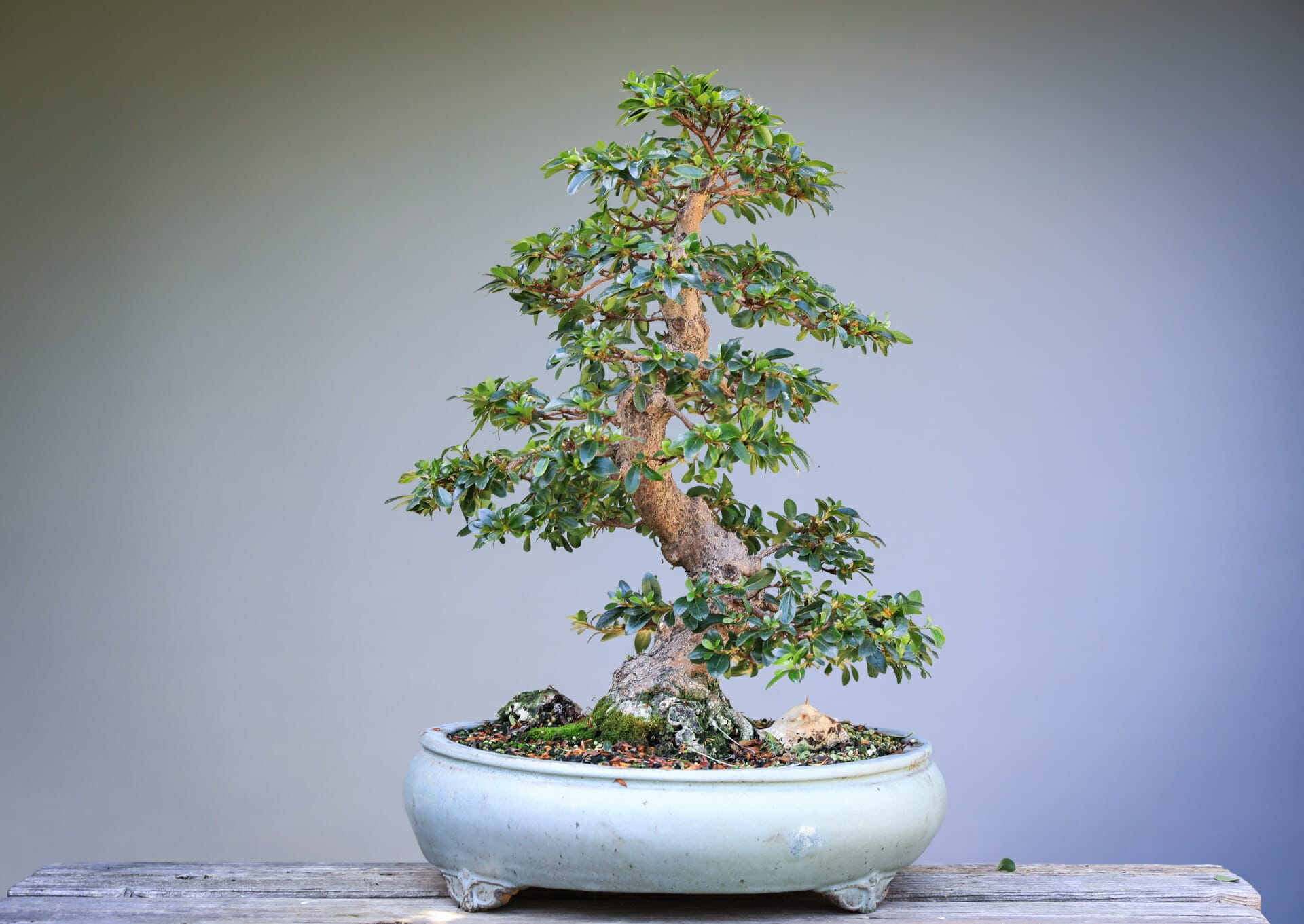
Here we can see the result of all the thinning work. Thanks to this maintenance intervention, the azalea is now ready to be further processed and shaped by removing larger branches or by wiring. The tree can now continue to develop until the end of its next bloom in a year's time.
Tips
Compared to other bonsai species, the Azalea requires a particularly large amount of water, about twice as much as most other varieties. The choice of water is important. As the Azalea does not tolerate lime, rainwater or water from a pond is suitable.
The ideal repotting time for the Azalea is March. Later repotting after flowering is also possible, but there should still be time until the hot summer months, otherwise it will not grow well.
The ovaries are now located where the flowers have fallen off. They must be completely removed for further processing, as their formation costs the azalea a lot of energy.