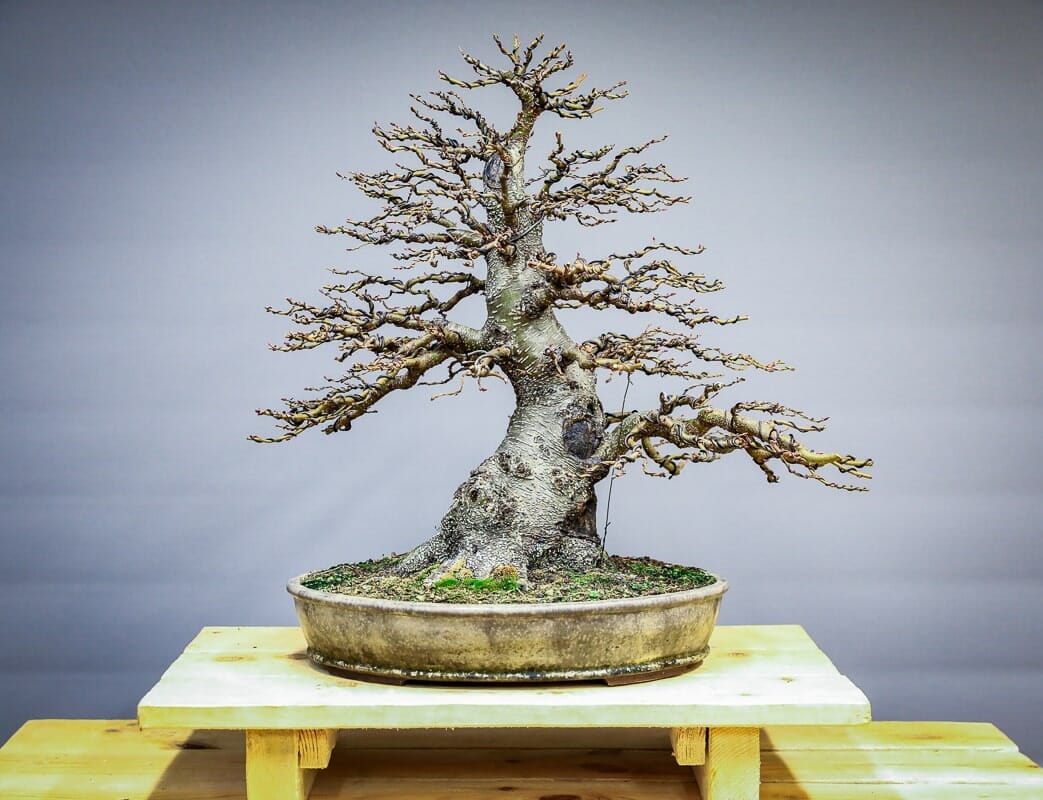
Instructions
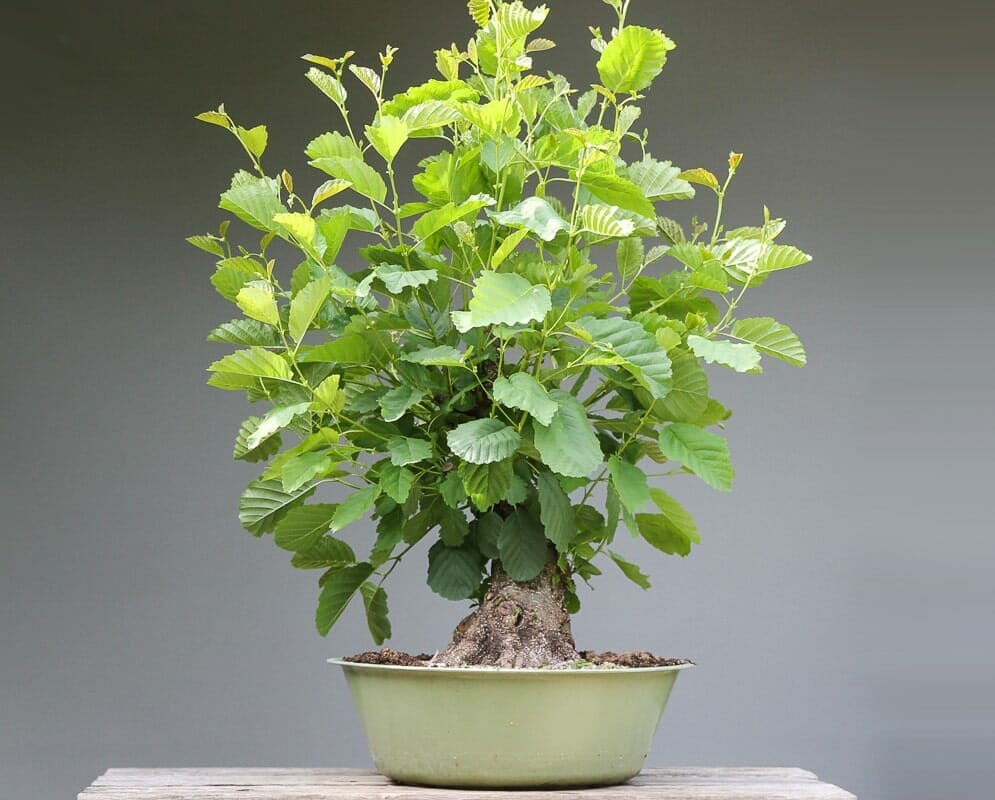
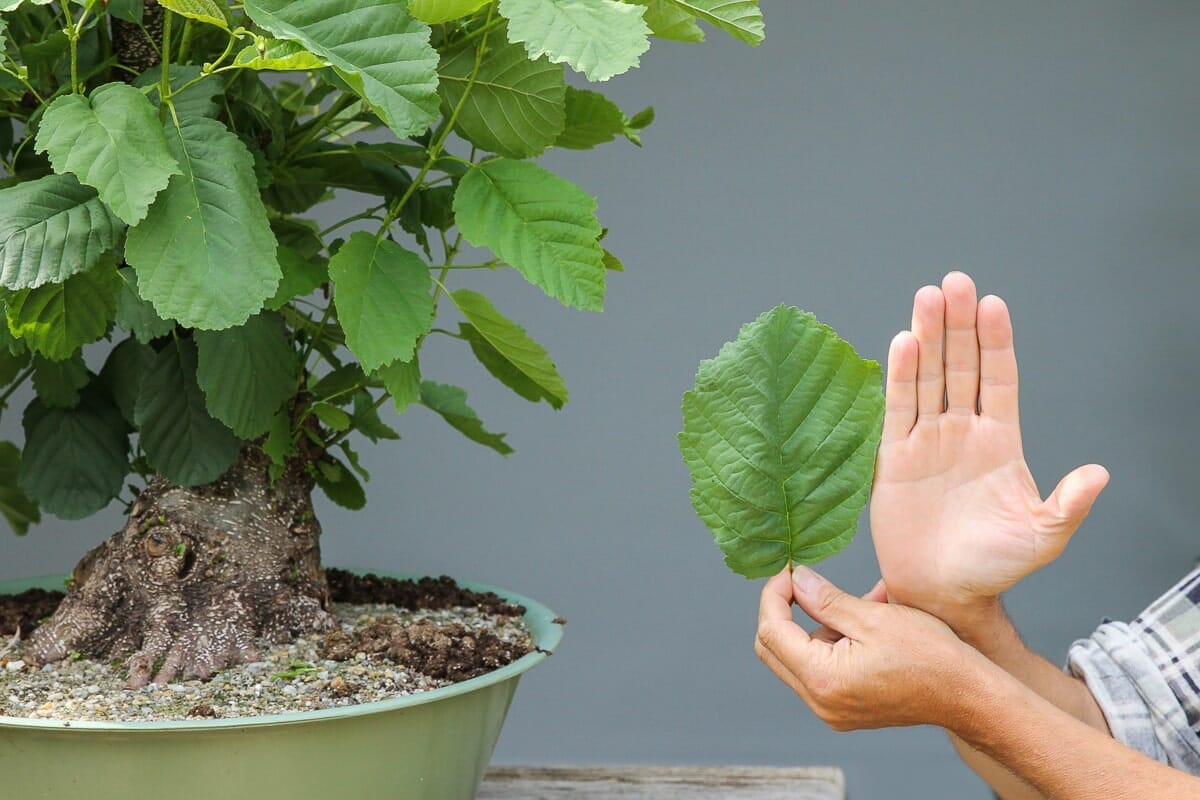
Black alder is a fast-growing tree and therefore requires particularly intensive care, but for the same reason it can also be established very quickly. The tree can tolerate two to four leaf cuts within a year. Young inner branches require special attention. If they do not receive sufficient light, they will die within a very short time.
It is therefore essential to check the alder at least once a week and to thin out the foliage regularly. At this stage of development, the branches of the alder can thicken so quickly that a wire placed around them can grow in within a week.
The black alder is a highly resistant tree that almost never has to contend with diseases in practice.
In our example, we will look at a black alder that was grown from seed. It was built up in the nursery over a period of eleven years. We show the progression from a growing tray to a ceramic tray.
Step 1
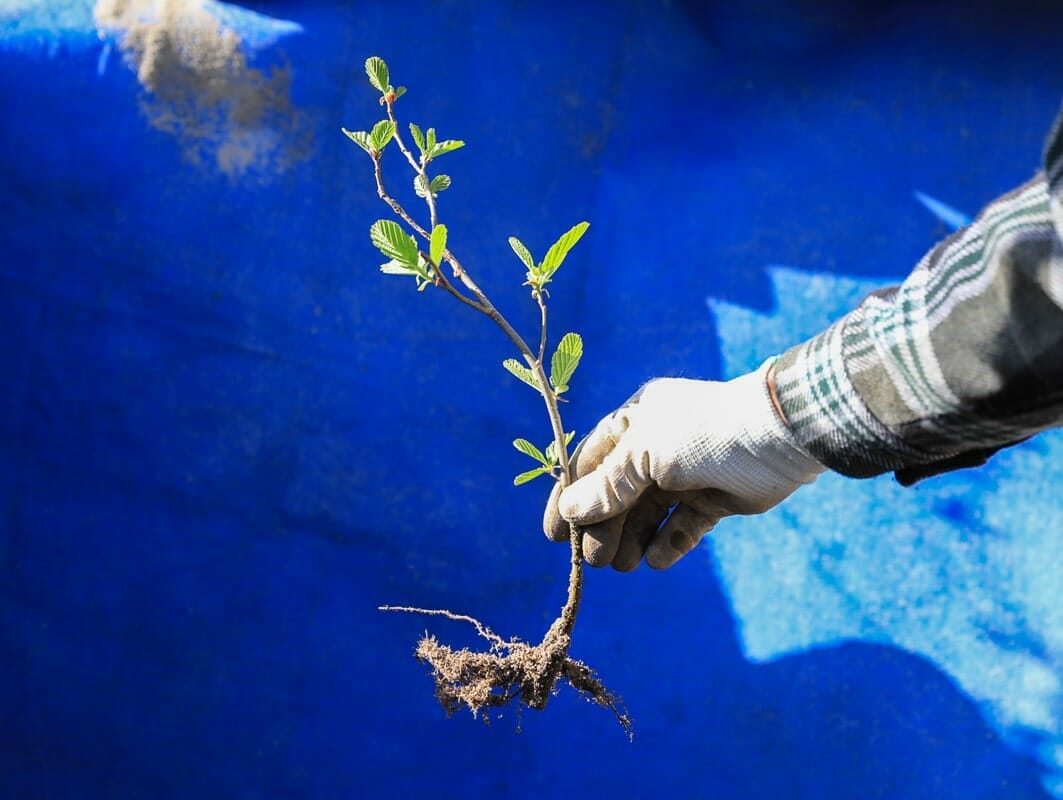
The basis for the structure is the two-year-old young plant, which was grown from seed in the nursery.
Step 2
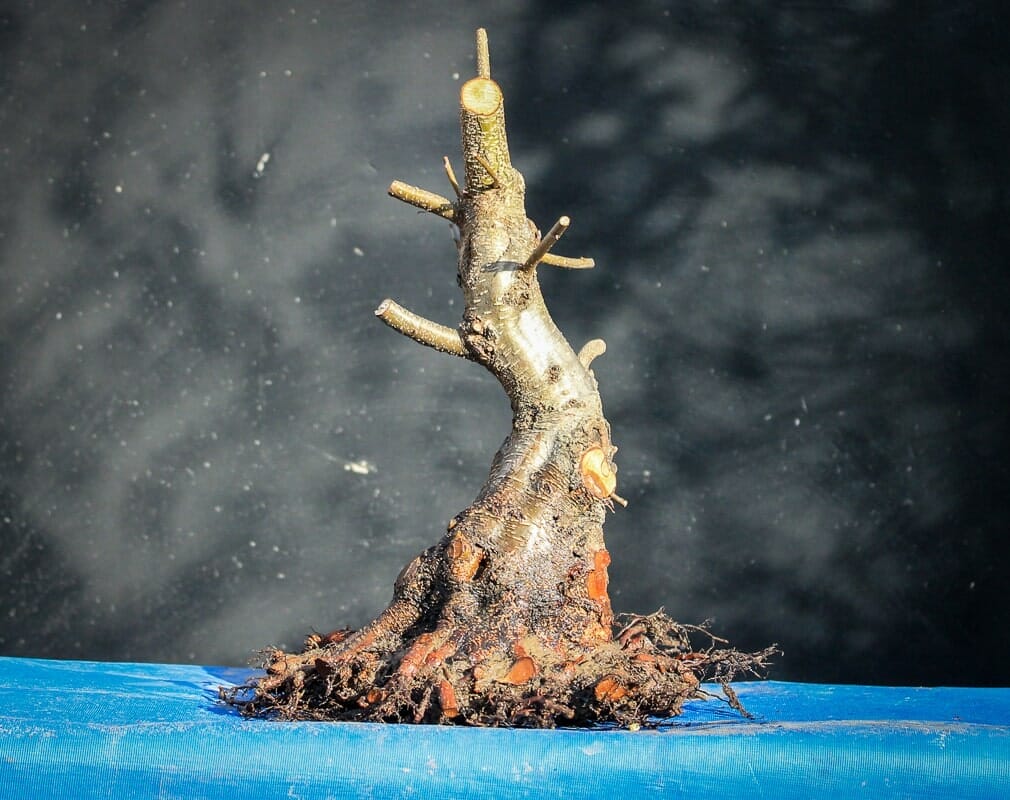
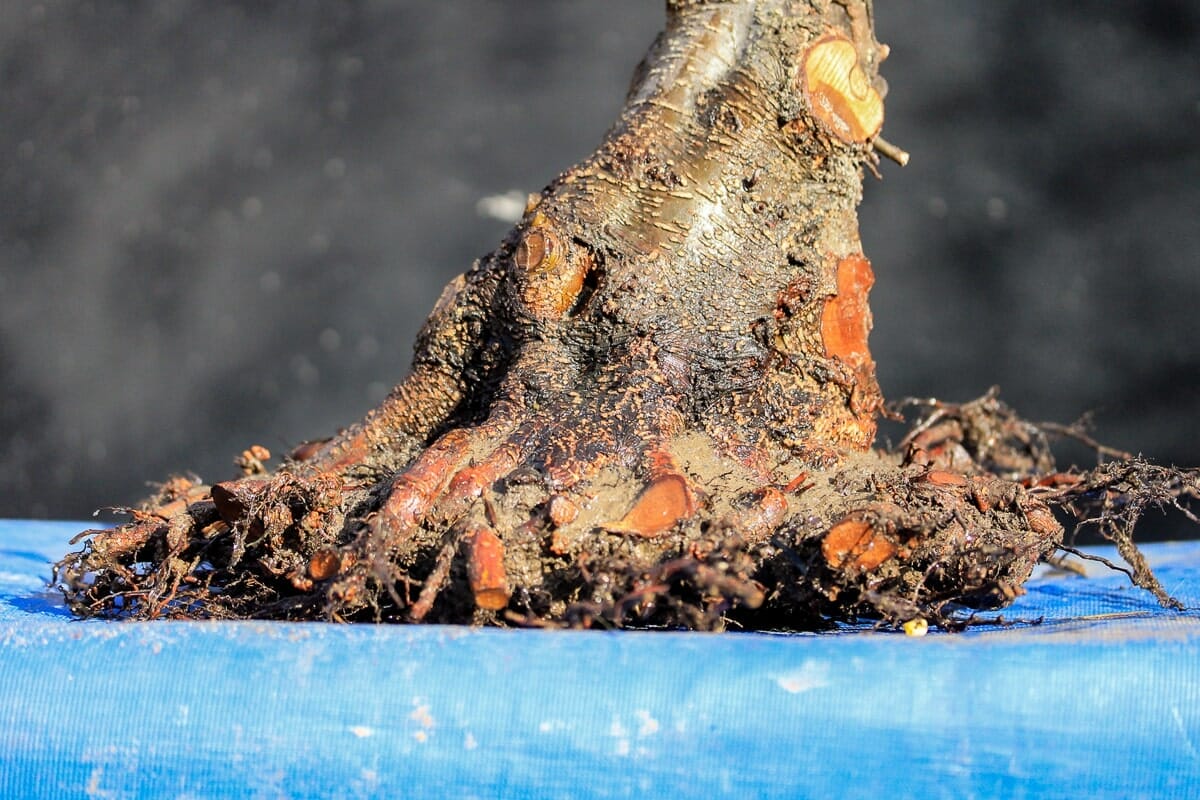
Over a period of eleven years, we then built up a thick trunk and a very broad root base. In April 2017, we dug up the tree at the nursery and gave it a severe root pruning. We then planted it in a pot.
Step 3
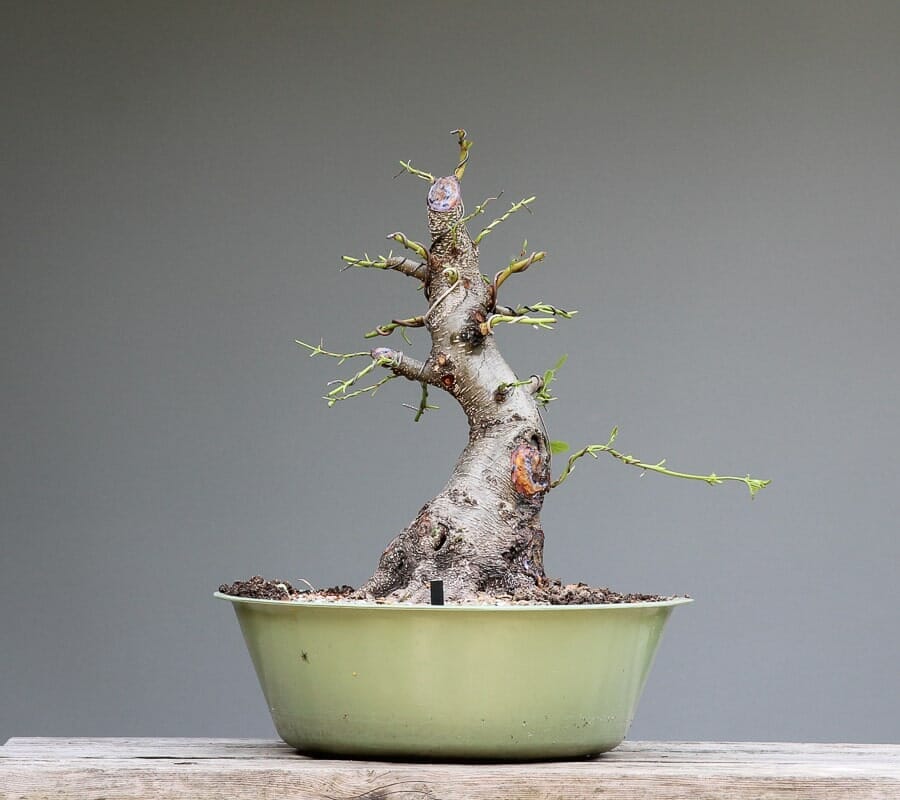
Here you can see the black alder in mid-May, just six weeks after planting. It had already produced such strong shoots that it had to be cut back considerably. This gave the alder its first rough basic shape. It will receive two more complete leaf cuts before the fall.
Step 4
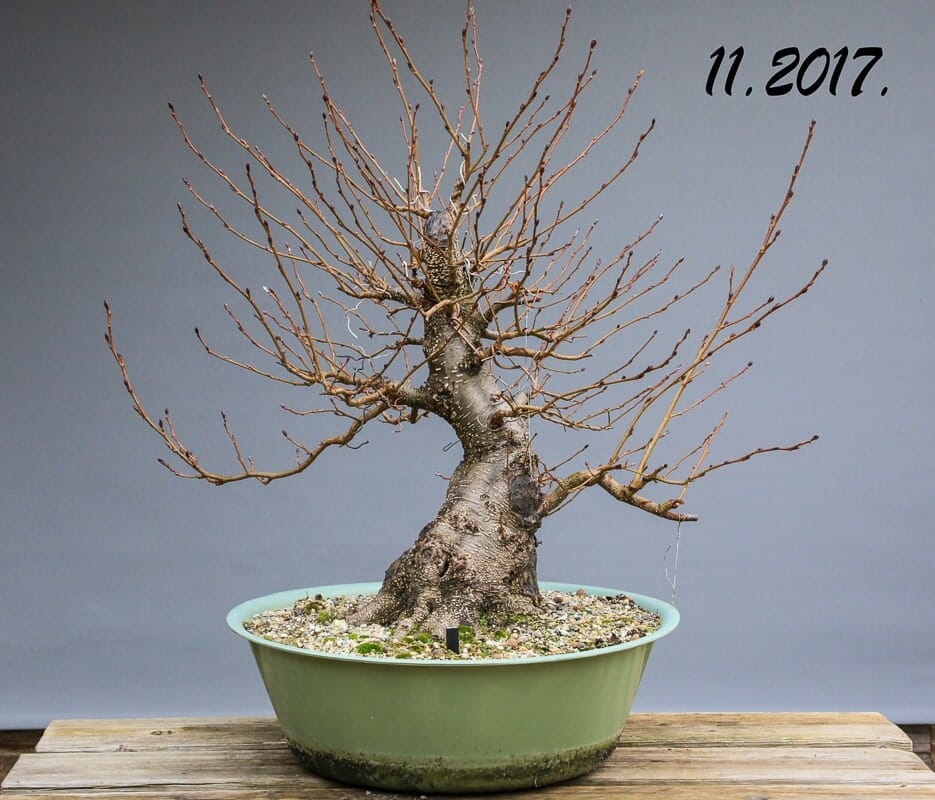
In the fall of the first year of growth, the tree took on this shape after the first rough shaping measures and leaf pruning.
Step 5
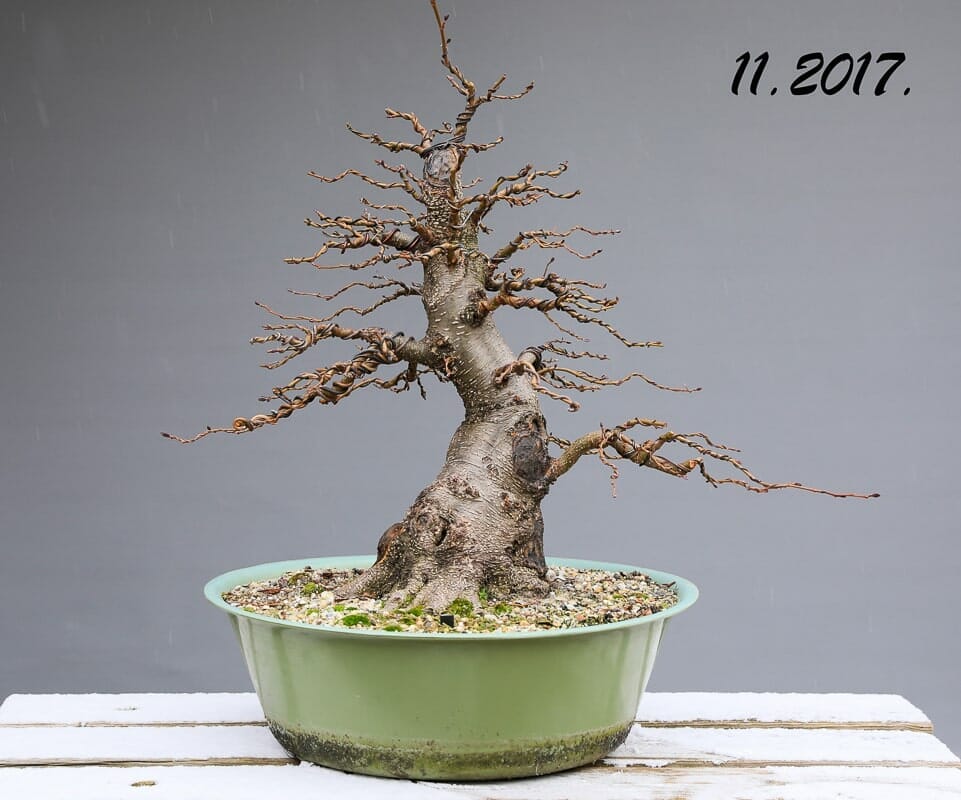
The first detailed design finally took place in October 2017, which produced this result.
Step 6
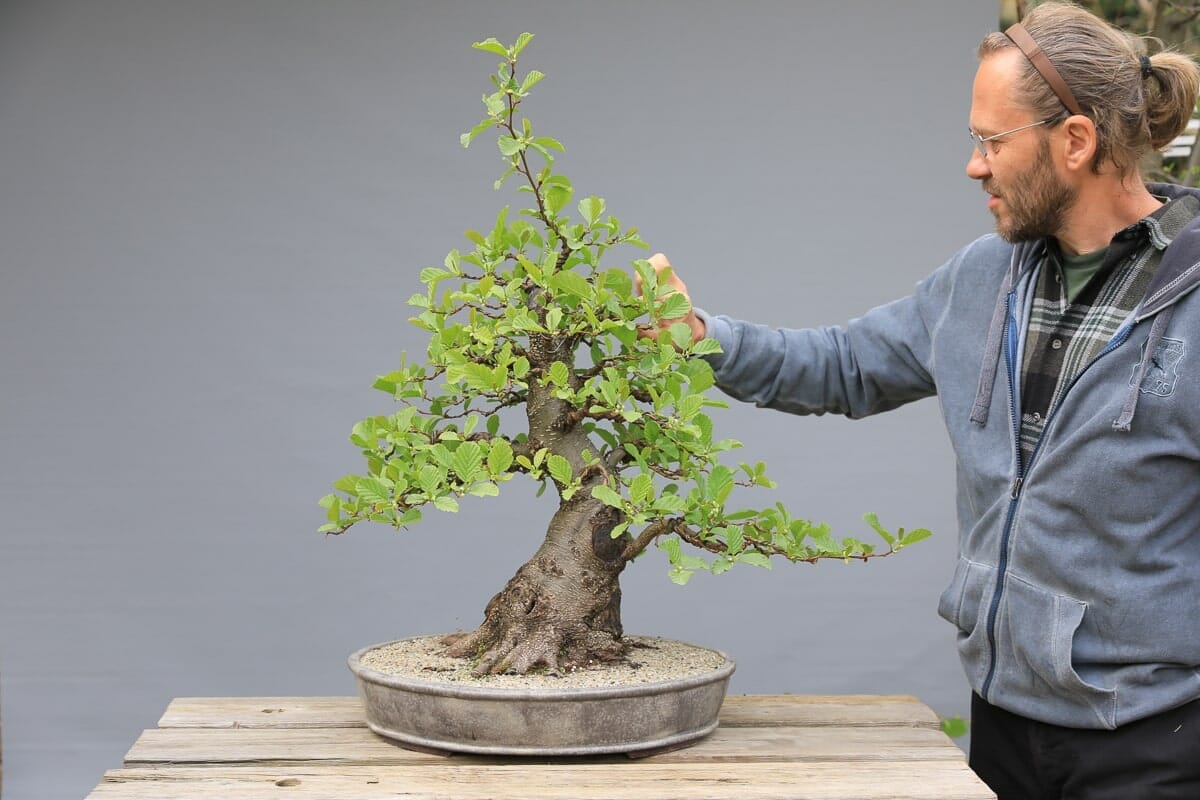
In April 2018, the alder had already improved significantly again and we were able to repot the alder in a ceramic pot.
Step 7
The design process in 2018: In May, mid-June and at the end of July, the alder was completely pruned and cut back.
Step 8
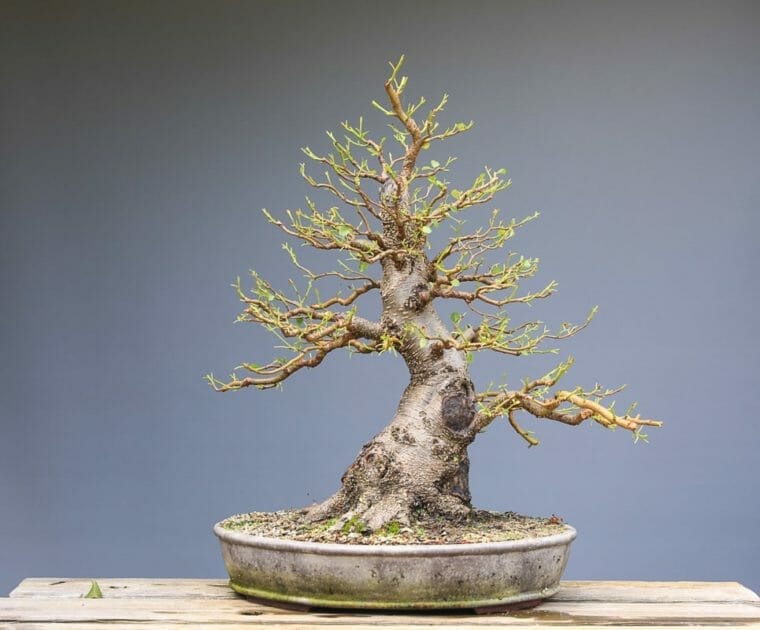
This is how the black alder will ultimately look in October 2018, and the fine-tuning has already taken place. It is impressive that the design is almost complete at this point. The rapid growth of the black alder, the numerous leaf prunings and lots of care are paying off extremely quickly.