Skip to article

Bonsai care · A practical example from a Bonsai Kreativ workshop

How to identify and control soft scale on yew

A practical example from a Bonsai Kreativ workshop

Josef Rauscher

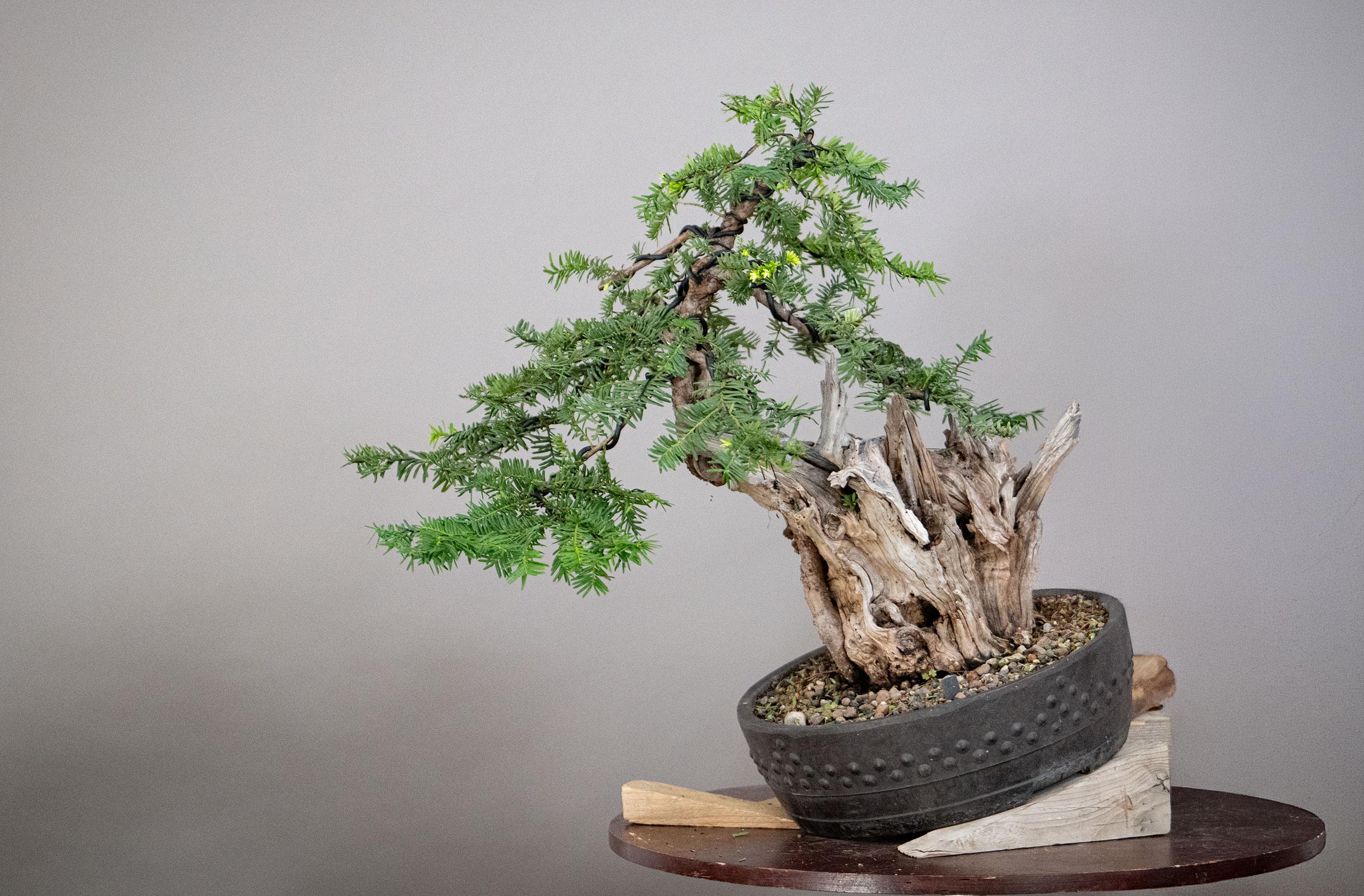
A styled yew bonsai with pale deadwood in a dark pot against a grey background.
The yew after styling at the Bonsai Kreativ workshop.
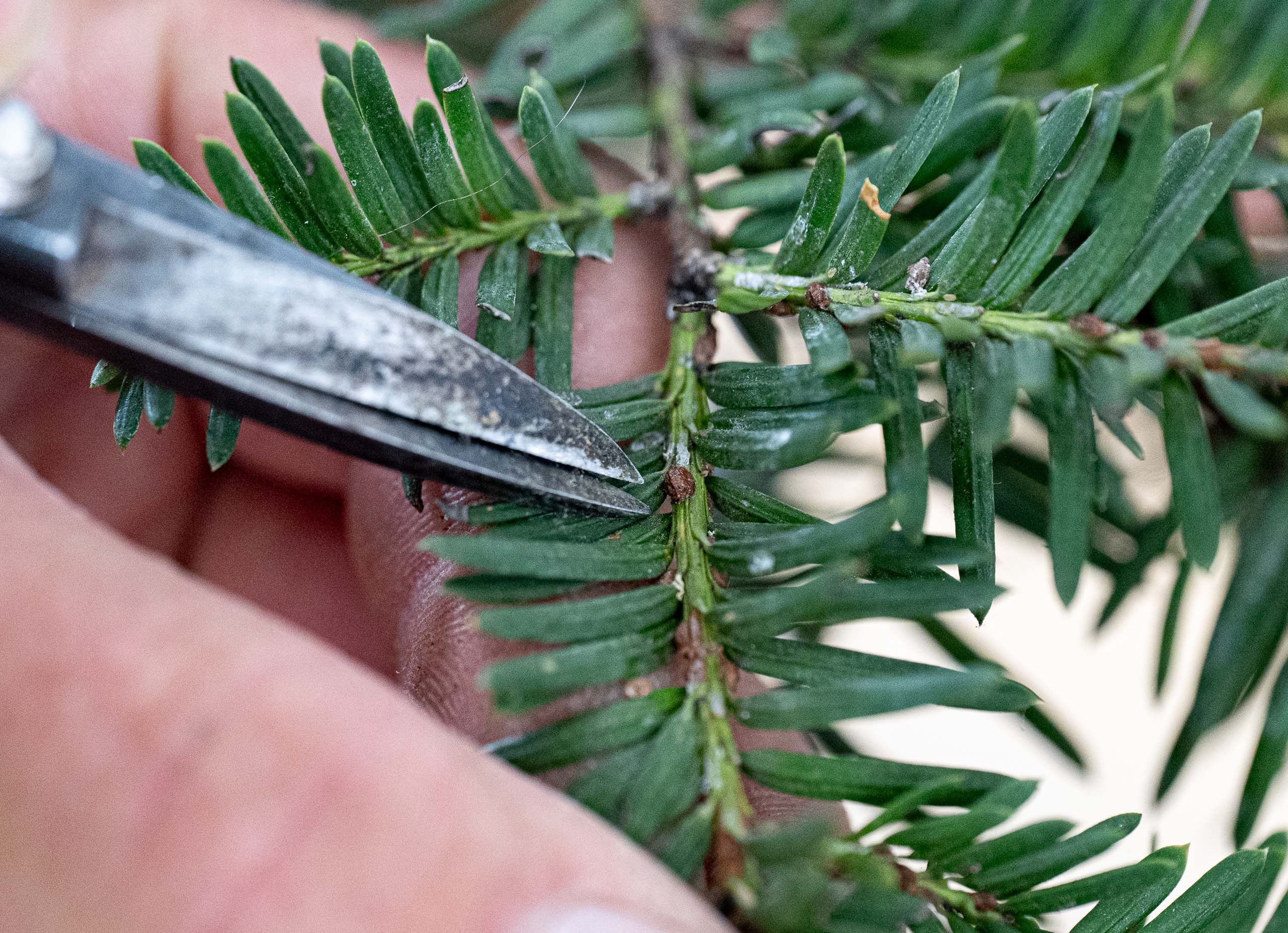
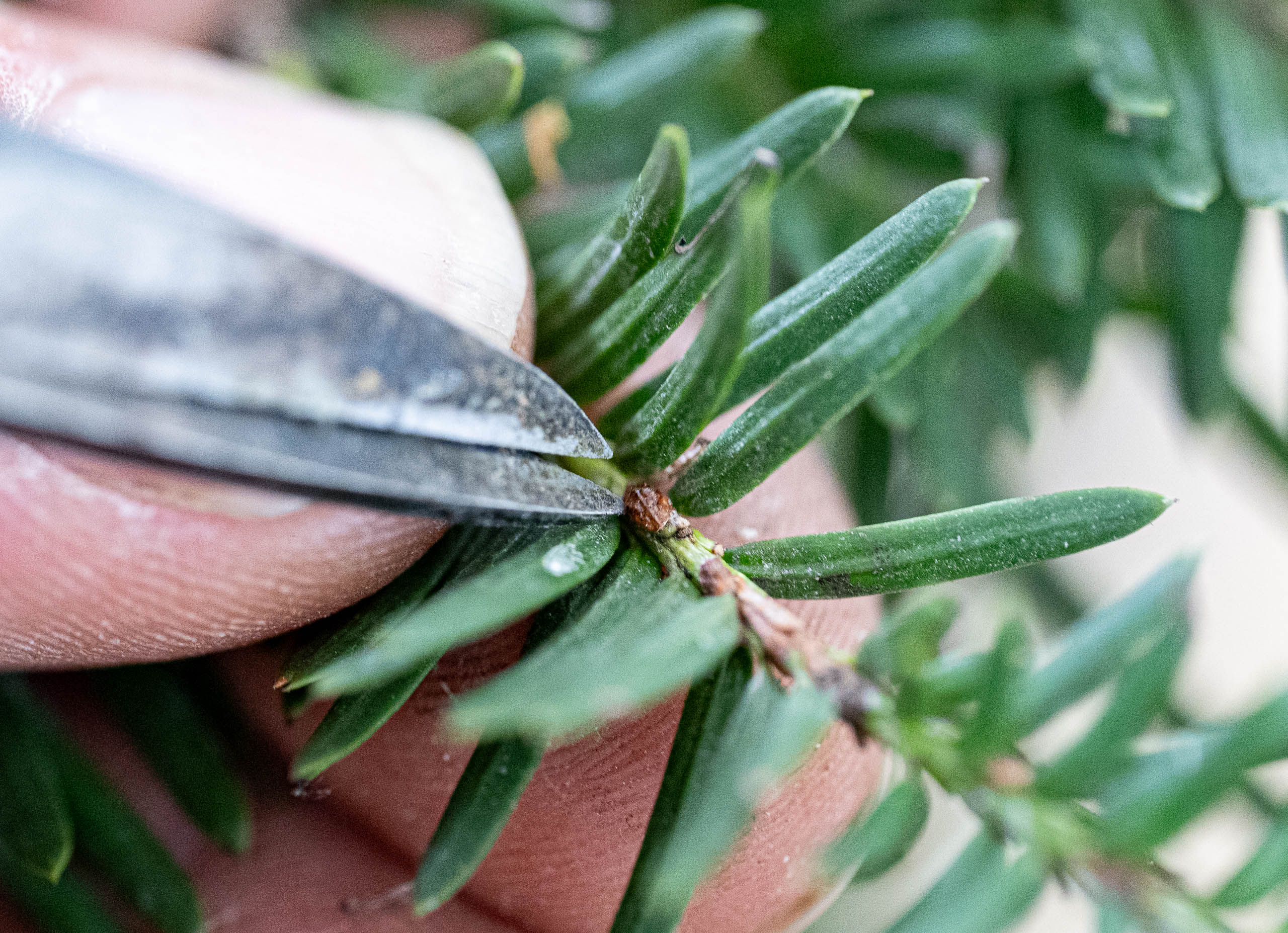
A pair of scissors points to a brown soft scale insect in a fork of the yew.
Thinning reveals infested spots in branch forks.
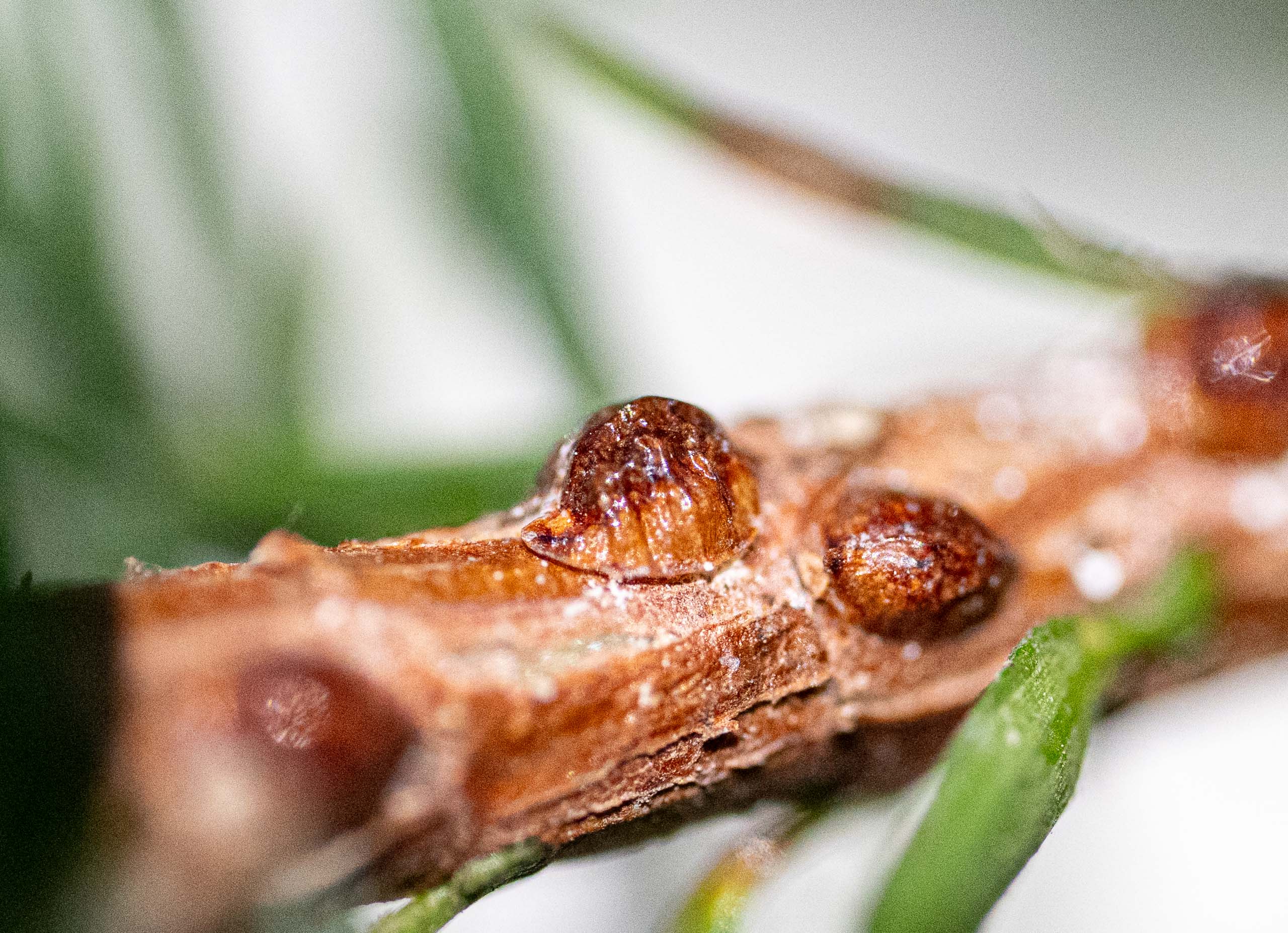
Close-up of shiny brown scale covers on a yew twig.
The scale covers can look like natural bumps on the bark.
The tip of a pair of scissors rests against a soft scale insect between yew needles.
The close-up shows how close a soft scale insect can sit to the base of a needle.

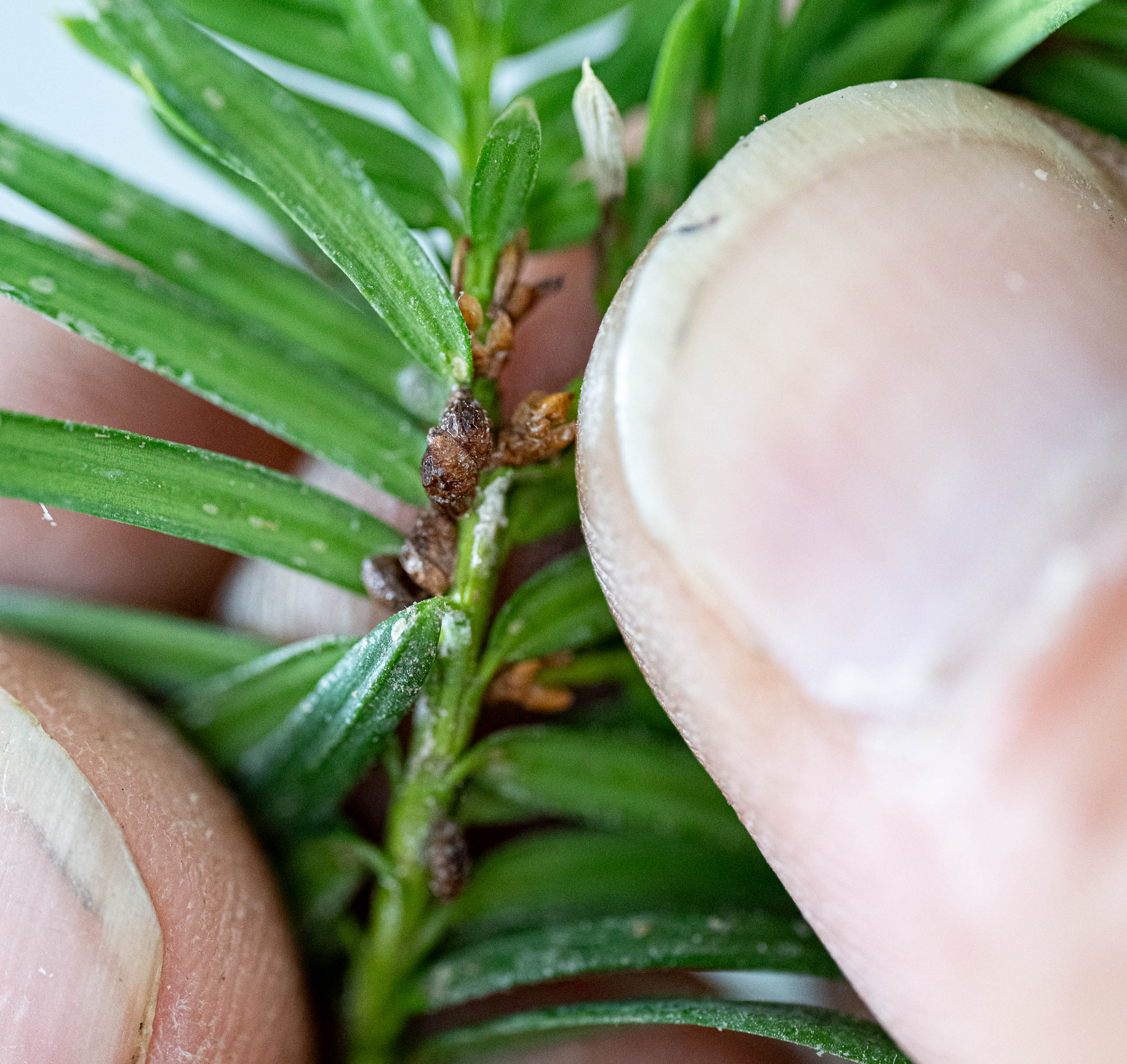
A closer look at the infestation

The yew in the photos was styled at a Bonsai Kreativ workshop. We noticed small brown bumps on several twigs. Soft scale insects have rounded covers that cling to the bark and can look like natural bumps. They are particularly easy to miss in the dense inner canopy and in branch forks.

Sticky needles and dark patches of sooty mould are other signs. A few scale insects are usually no problem for a healthy yew, but a heavier infestation can weaken new growth.

Thinning the canopy

When thinning a bonsai, its intended shape determines which twigs to remove. Keep branches that are important to the design even if they are infested. A less dense canopy makes it easier to check branch forks and thin twigs for scale.
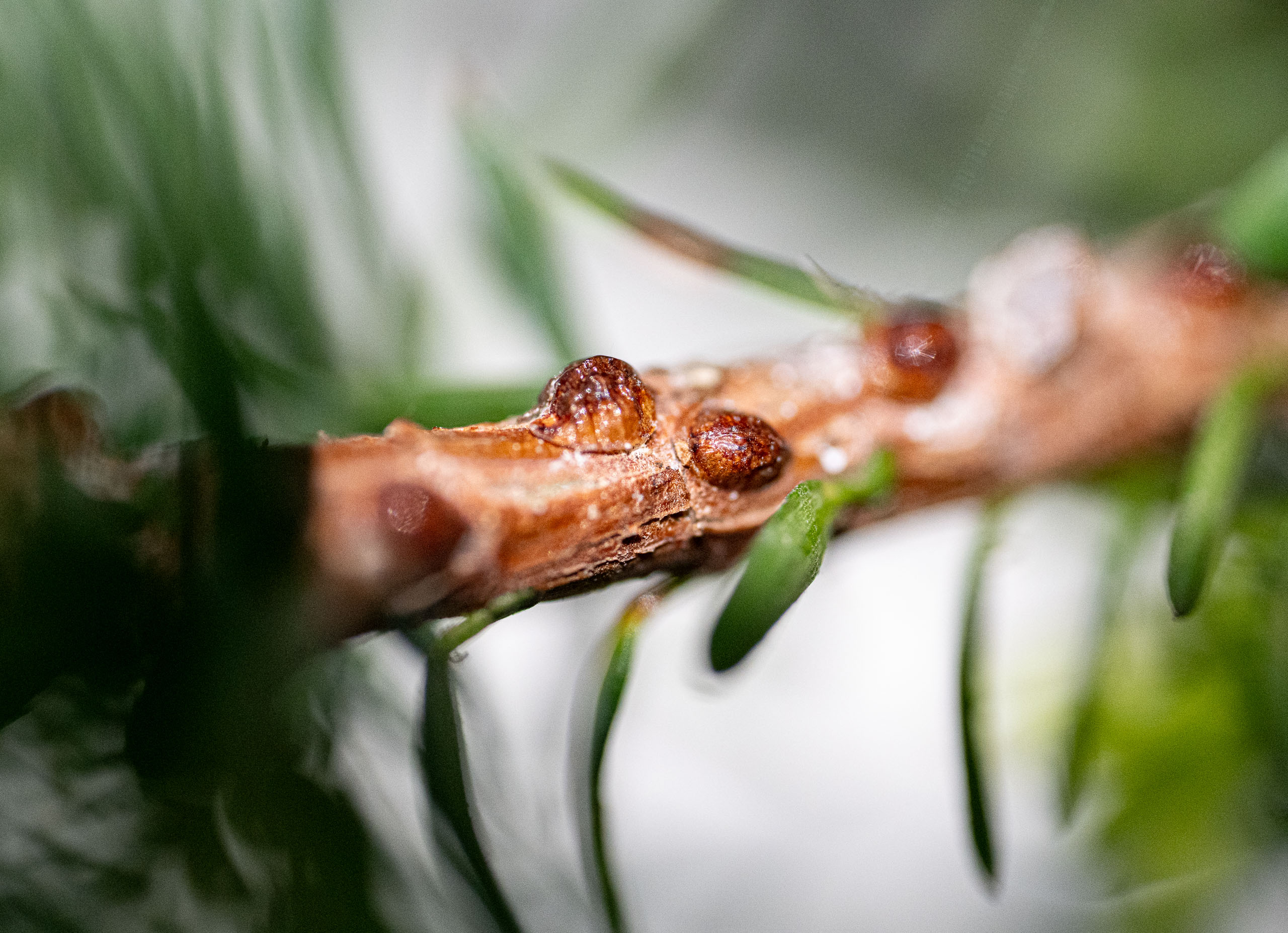
Two brown, rounded soft scale insects on the bark of a yew twig.
The close-up shows their characteristic rounded shape.
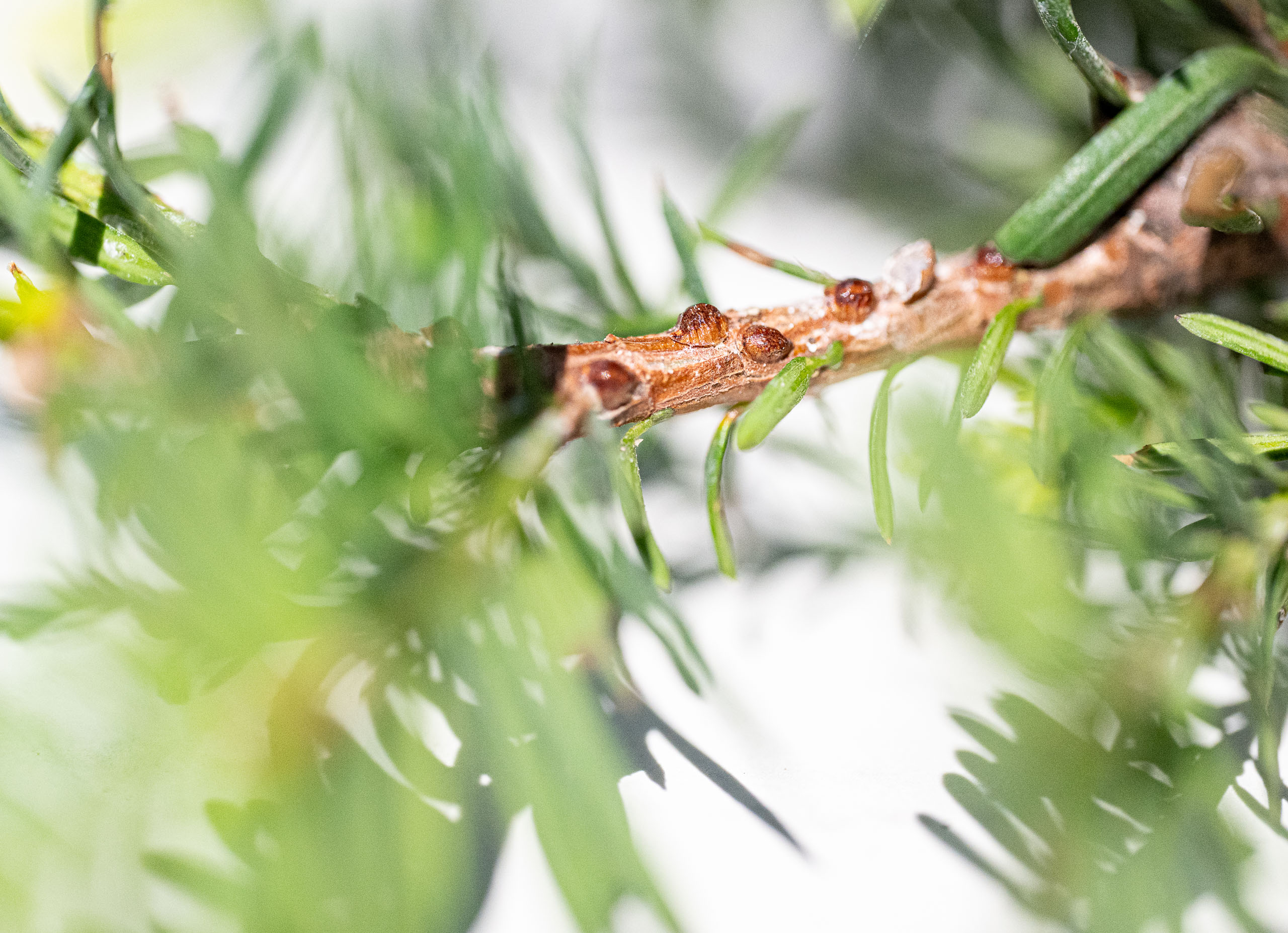
Several brown soft scale insects on a yew twig among green needles.
The infestation among the needles only becomes apparent on closer inspection.
Fingers part the yew needles to reveal several brown soft scale insects.
Moving the needles aside reveals the infestation on the twig.

Treatment

Once the canopy has been thinned, it is easier to assess how heavily the yew is infested. Leave the scale covers on the tree. They may shelter eggs that could be spread to other parts of the plant by scraping or brushing.

In my experience, Mospilan 20 SP, which contains acetamiprid, has worked well against soft scale. It is available in Poland. Follow the authorisation requirements and directions for use where you apply it.

The Polish label specifies a minimum interval of seven to ten days between two treatments on ornamental plants. More young scale insects may hatch after the first treatment. At this early, mobile stage, their protective covers are not yet fully developed, so a second treatment can reach them more easily. This can help interrupt the life cycle.
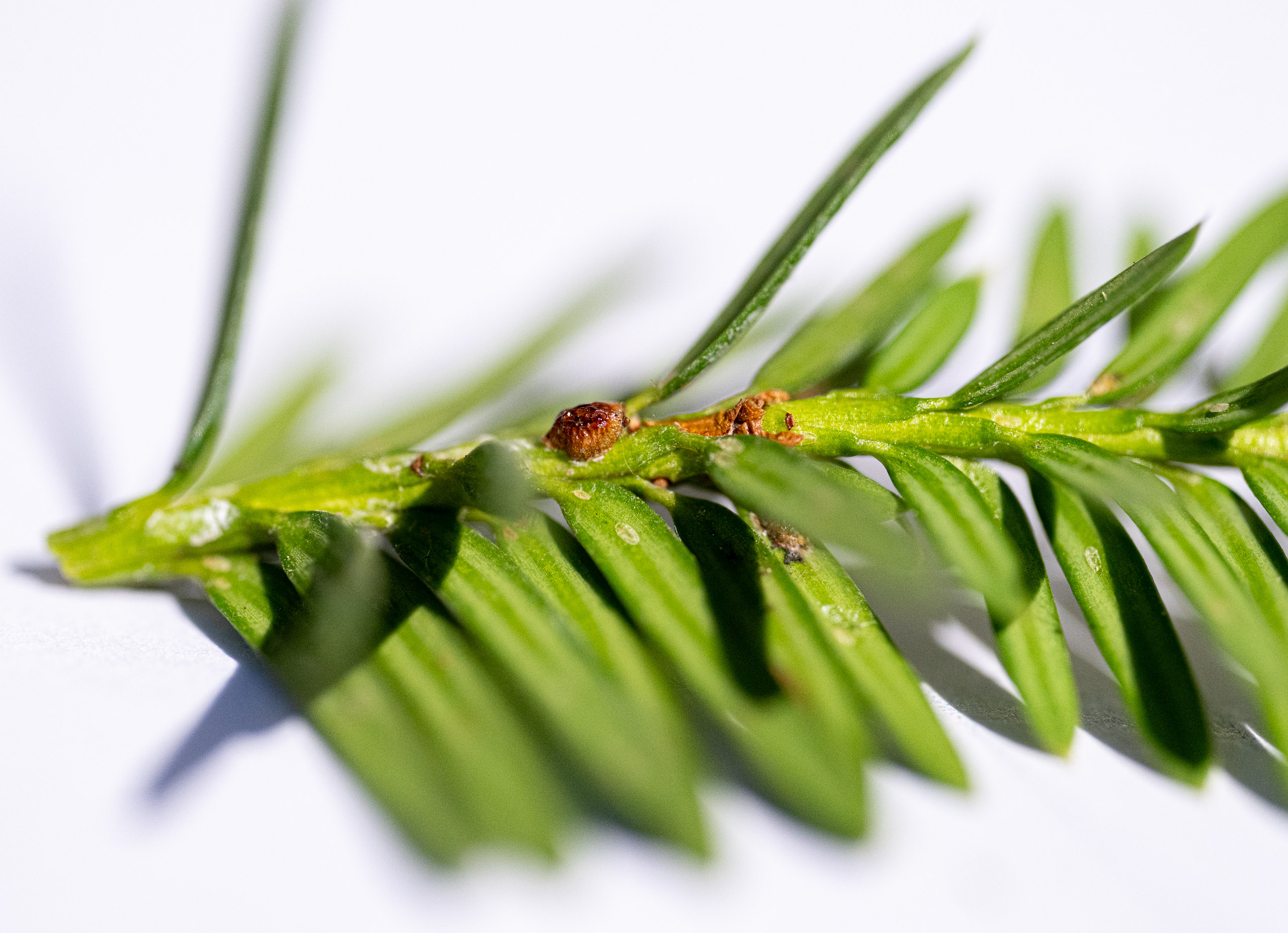
A brown soft scale insect on a young green yew twig.
Check young twigs during follow-up inspections too.

Three practical tips.

  1. Check inside the canopy

    Carefully part the needles and inspect thin twigs, branch forks and the undersides of twigs. Sticky needles and dark deposits are signs to look more closely.

  2. Keep key branches

    Let the planned shape of the yew guide your thinning. Keep branches that are important to the structure even if they are infested. Thinning usually makes them easier to inspect.

  3. Check again

    Note where you found the infestation and revisit those spots in the following weeks. Check bonsai growing close by too. Young scale insects are mobile and can spread to other trees.