Skip to articles

01 / Knowledge from practice

Bonsai knowledge.

Knowledge. Observation. Understanding.

Bonsai care, design, growing methods and fundamentals: explore articles on tree analysis, pruning, grafting and repotting. Photographs and practical guides explain what to consider when working on a tree.

Knowledge from practice

All articles

Bonsai basics

Bonsai substrate: properties and the right mix

Some important properties that a bonsai soil should have! Good water and nutrient storage, but also good air and gas exchange are important. The standard ratio of bonsai soil: 40% solid, 30% liquid and 30% air. The composition: 1/3 cactus soil (nutrient-poor soil), 1/3 Akadama (Japanese clay granules) or pumice and 1/3 lava granules and angular grit. The granules should be no smaller than 3 mm and no larger than 5 mm. The bonsai soil is mixed deliberately lean in order to be able to control the growth of the plant.

Josef Rauscher

Read article

More articles.

Bonsai basics

When to fertilise bonsai

Fertilization always begins in spring, the gardener starts when the buds of deciduous trees begin to swell. In the case of deciduous bonsai, you start when the new leaves have hardened, if you fertilize earlier, this can result in larger leaves.

Josef Rauscher

Read article

Bonsai basics

Understanding bonsai leaves and needles

Between the roots and the leaves, the trunk and the branches are an important transport conductor to the solar cells of a tree. The leaves of a tree could easily be described as solar cells. In order to obtain energy and building materials from carbon dioxide from the air and water from the soil plus sunlight, a leaf uses a process known as photosynthesis. To understand this assimilation process, it is necessary to look at a leaf in cross-section.

Josef Rauscher

Read article

Bonsai basics

Why bonsai leaves change colour in autumn

In autumn - as we know - the leaves on the trees change color and fall off later. But why is that? What happens in the leaves? Is a new colorant being stored or is the green one being changed?

Josef Rauscher

Read article

Bonsai basics

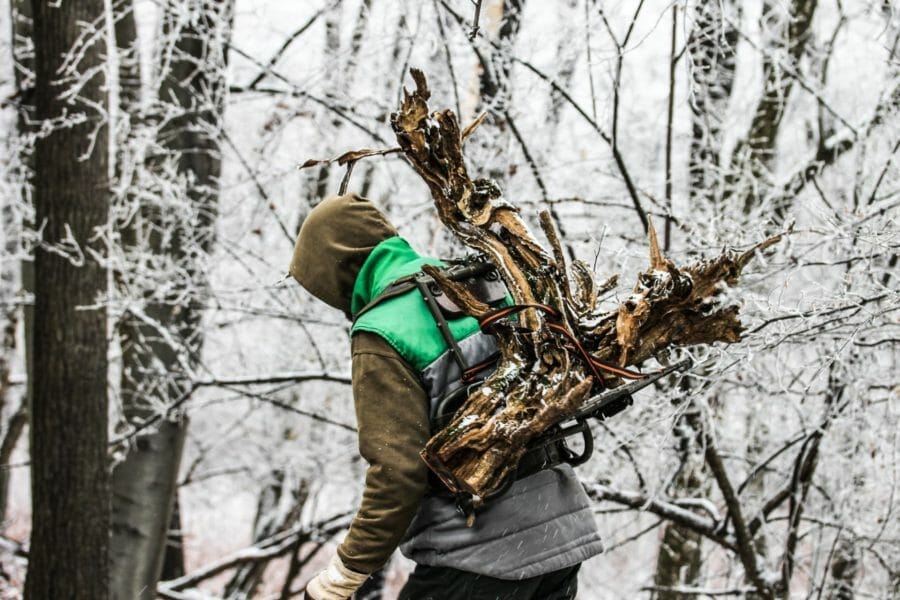
Collecting yamadori: what to consider

The term YAMADORI comes from the Japanese and means a COLLECTED TREE from nature. In the last 3-4 years, collecting trees from nature has become increasingly popular with bonsai enthusiasts. Any self-respecting bonsai lover must have a Yamadori bonsai in his collection.

Josef Rauscher

Read article

Bonsai basics

Winter care for bonsai

At the end of the vegetation period, when the daylight decreases, the bonsai begins to prepare for winter. Nutrients are no longer used for length and strength growth, but are transported to so-called parenchyma cells (plant tissue whose cells consist of the same length, width and height) in the bast and sapwood (where the sap ducts are located).

Josef Rauscher

Read article

Articles 25–30 of 45

Bonsai Kreativ / Knowledge

Observe.
Understand the choices.

The articles cover tree analysis, deadwood, repotting and pine grafting, connecting observation and technique with the long-term development of a bonsai.

About Josef Rauscher